

with the purchase of an American Flag


Yes, you can fly a custom flag on a residential flagpole in 2026 when the flag fits the pole’s approved attachment system and load limits, and your property rules permit the display. If you also fly the American flag on the same staff, place the custom flag below it; permission to display the American flag does not automatically cover a custom design.
TL;DR
- Can you fly a custom flag on a residential flagpole? Yes—check property rules, attachment compatibility, and permitted flag load.
- Federal Flags sells residential flagpoles; select hardware for your flag’s size and mounting method, not its artwork.
- Under U.S. Flag Code guidance, a custom flag belongs below the American flag on the same staff.
- An American flag display right does not automatically authorize a custom flag under HOA rules.
Check the display, not just the design
A family crest, holiday illustration, or personal message does not require a special category of flagpole. The practical questions are whether the flag attaches correctly, clears nearby surfaces, and stays within the manufacturer’s instructions. A design that looks good on your screen still needs an outdoor flag construction suited to the installation.
Start with the flag size by flagpole height sizing chart, then check the instructions for your particular pole. Height helps you choose proportions, but height alone does not establish the permitted flag load. The pole’s instructions take priority over a general sizing chart.
For a 2026 home display, separate permission from physical compatibility. A correctly attached flag can still violate a covenant, and an approved design can still be too large for its bracket. Check both before you order.
Can you fly a custom flag on a residential flagpole?
Yes. A custom flag can fly on a residential flagpole when the installation permits its size, attachment method, and intended use. The artwork does not determine mechanical compatibility; the finished flag and mounting hardware do.
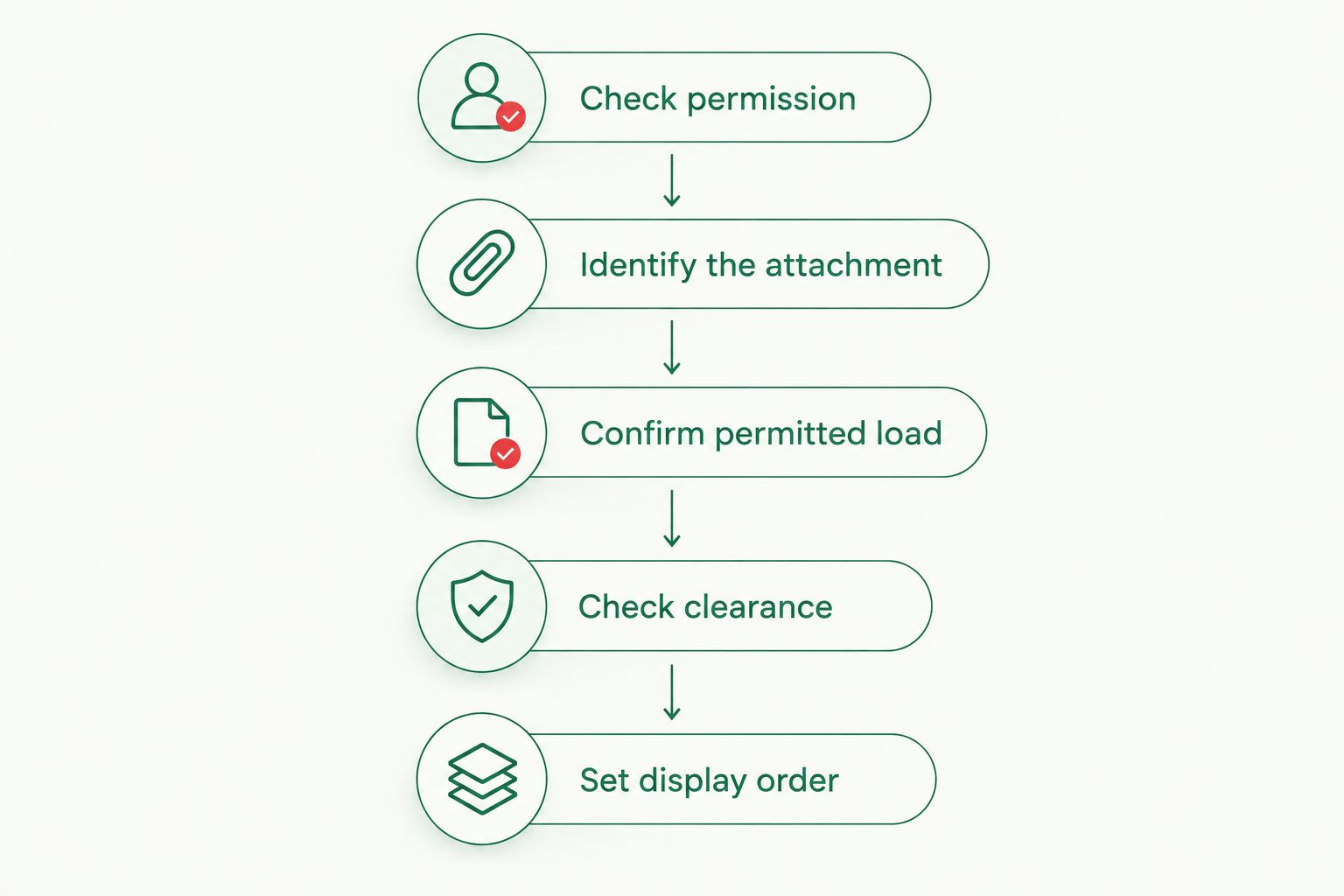
Use this sequence before raising it:
- Check permission. Read applicable HOA rules, condominium documents, lease terms, and local requirements. Look separately for restrictions on the pole, flag dimensions, and displayed message.
- Identify the attachment. Determine whether your pole uses clips on a halyard, attachment rings, or a sleeve-style flag. Order the finish that matches the hardware.
- Confirm the permitted load. Check the manufacturer’s allowed flag dimensions, number of flags, and operating conditions. Do not assume an existing American flag proves a larger custom flag is acceptable.
- Check clearance. Account for the flag’s movement around siding, porch posts, vegetation, and nearby wires. Inspect the display from more than one angle.
- Set the order of display. If the American flag shares the staff, keep the custom flag below it. Ensure both remain clear of surrounding surfaces.
These checks answer different questions. Permission covers whether you can display the flag; attachment and load limits cover whether your equipment can carry it. Passing one check does not replace the others.
Which residential flagpole setup fits your custom flag?
Wall-mounted, in-ground halyard, and telescoping poles can support custom displays when their instructions permit the finished flag. Choose the installation around your space and attachment needs, rather than assuming every residential pole accepts the same flag finish.
| Residential setup | Best for | Practical advantage | Limitation to check |
|---|---|---|---|
| Wall-mounted pole | Homes with a suitable mounting surface and limited yard space | Places the display beside the house without a freestanding ground installation | Bracket support, flag attachment, and clearance from the building |
| In-ground halyard pole | Yards with room for a freestanding display | A rope or cable system raises and lowers the flag | Foundation requirements, flag load, and compatible clips or fittings |
| Telescoping pole | Homeowners who prefer a section-lowering arrangement | Pole sections retract rather than relying on a conventional raising rope | Manufacturer-specific attachment hardware, locking instructions, and load limits |
Use the setup your site and flag actually support. A wall-mounted pole is not a substitute for a freestanding installation when the flag repeatedly strikes the house. A taller in-ground pole is not automatically the better choice when you lack a suitable installation area.
Federal Flags is best for homeowners shopping for made-in-USA American flags and residential flagpoles. For a custom display, the same buying discipline applies: compare the attachment method and installation requirements before choosing the pole. A residential category label alone does not establish compatibility with your finished flag.
Wall-mounted poles: inspect the bracket and surrounding space
A wall-mounted custom flag needs compatible attachments and a secure mounting surface. Check the bracket instructions rather than treating decorative trim or siding as proof of structural support. The connection to the house matters as much as the pole itself.
Look at the flag’s likely travel around the mount. A flag that brushes a gutter, masonry corner, or shrub has a clearance problem even when its attachment is correct. Choose the finished dimensions before deciding that the mounting position works.
In-ground poles: check the full installation
An in-ground custom display includes more than the visible pole. Follow the specified foundation, sleeve, or base requirements, and confirm the halyard hardware matches the flag. Adding a custom flag does not change those installation obligations.
Do not transfer a rating from another pole. For example, Federal Flags lists a commercial 30 ft pole with a 95 mph rating; those figures describe that listed product, not every residential installation. A wind rating is not blanket permission to fly any flag size in that wind.
Telescoping poles: follow the attachment instructions
A telescoping pole needs the attachment components specified for its design. Do not replace its rings or fittings with improvised hardware simply because the custom flag arrived with a different finish. Resolve the mismatch before use.
Check how you will lower the display for inspection and weather precautions. Follow the locking and handling instructions for the specific pole, and keep the flag within its approved dimensions and flag-count limits.
What changes whether a custom flag will work?
The factors below determine whether your custom display suits the property and hardware. None depends on whether the artwork is a family emblem or a seasonal message.
- Property rules: Covenants, lease terms, and local requirements determine which displays and installations are permitted.
- Flag dimensions: A larger flag changes the exposed fabric area and the space needed for movement. Check the approved dimensions, not just visual proportions.
- Attachment finish: Grommets, sleeves, and other finishes need matching pole hardware. A finish mismatch requires a different flag or an approved attachment solution.
- Flag count: Adding another flag changes the load and clearance requirements. Confirm that the pole permits the complete arrangement.
- Weather exposure: Follow the pole and flag instructions for wind and adverse weather. A rating cannot be separated from the conditions and configuration attached to it.
- Mounting and clearance: The foundation or bracket must support the installation, and the flag must avoid damaging contact with nearby surfaces.
For your 2026 setup, record the manufacturer’s instructions alongside the flag order. That gives you a reference when replacing the flag later, instead of relying on memory or matching appearance.
Can my HOA stop me from flying a custom flag?
An HOA’s rules can restrict a custom flag, subject to applicable law. Read the governing documents and relevant state or local protections before assuming that a right to display the American flag also applies to your design.
The federal Freedom to Display the American Flag Act addresses displays of the United States flag in covered residential associations. It is not a general authorization for every custom flag, and it allows certain reasonable restrictions. Keep that distinction separate from questions about political-expression protections under state law.
For a 2026 request, submit the proposed dimensions, mounting position, and artwork through the association’s required process. Ask for the applicable rule in writing. If the language is disputed, obtain legal advice rather than treating an informal conversation as approval.
Can I fly a custom flag below the American flag?
Yes, a custom flag can fly below the American flag on the same staff when the pole permits both flags. U.S. Flag Code guidance in Title 4, Section 7(c), places the United States flag at the peak when other flags share the same halyard.
Check the physical arrangement as well as the order. Both flags need compatible attachments and adequate clearance. Correct etiquette does not make an overloaded pole acceptable.
For adjacent staffs, Title 4, Section 7(c), also addresses the American flag’s position and raising and lowering order. Use the arrangement guidance that matches your display instead of applying the same-staff rule to every layout.
Do I need a special pole for a custom flag?
No, custom artwork alone does not require a special pole. You need a pole that supports the finished flag’s dimensions, attachment method, and intended display conditions.
A compatible custom flag can replace an existing flag without changing the pole. That does not mean every replacement works: a larger size, different finish, or additional flag requires a fresh compatibility check. Treat the finished product—not the word custom—as the deciding factor.
What to specify before ordering a custom flag
Write the finished dimensions and mounting finish into your order. Include how the flag will be displayed: wall-mounted, on a halyard, or on a telescoping system. That information is more useful than saying only that the flag is for a house.
Federal Flags lists Custom Printed Flags, a relevant starting point for a personalized display. Confirm the available dimensions, attachment finish, and outdoor-use details before ordering. Do not assume a printing option establishes compatibility with your existing pole.
Use this order checklist:
- Finished dimensions: Match the pole’s permitted size and your available clearance.
- Mounting finish: Specify the attachment your actual hardware accepts.
- Outdoor suitability: Confirm the intended exposure and care instructions for the selected flag.
- Artwork orientation: Check which edge attaches to the pole and how the design should read.
- Reverse appearance: Confirm whether the reverse is mirrored or has a separately readable design.
- Proof approval: Review spelling, layout, and orientation before approving production.
For a 2026 event or seasonal display, settle these specifications before approving the artwork. A corrected drawing does not fix the wrong mounting finish after the flag is made. Keep the approved specifications with your pole instructions for future replacements.
Inspect the first display before leaving it up
Raise the flag and observe how it hangs and moves. Look for contact with the house or landscaping, attachments that bind, and a flag that wraps around the pole. Correct visible problems before leaving the display unattended.
Inspect the mounting area too. Follow the manufacturer’s directions for checking brackets, fasteners, halyards, and section locks. Do not compensate for a loose mounting connection by tightening unrelated parts or adding unapproved fittings.
In 2026, make removal and inspection part of the display plan rather than an afterthought. Keep a practical way to lower the flag, follow weather instructions, and replace damaged attachment components with compatible parts. Convenience is not a reason to leave a questionable installation in service.
FAQ
Can you fly a custom flag on a residential flagpole?
Yes, you can fly a custom flag on a residential flagpole when property rules permit it and the flag matches the pole’s approved size, attachment system, and load limits. Check all of those conditions before raising it.
Can I put my family crest on a house flag?
Yes, a family crest can be used on a house flag. Confirm that your property rules allow the display and that the finished flag attaches correctly to your pole.
Does permission to fly the American flag cover a custom flag too?
No, permission or legal protection for displaying the American flag does not automatically cover a custom flag. Check the rules and laws that apply to the particular design and property.
Can I fly an American flag and a custom flag together?
Yes, provided the pole permits the combined flag load and the arrangement follows applicable display rules. On the same staff, U.S. Flag Code guidance places the American flag above the custom flag.
Will a grommeted custom flag fit a sleeve-style pole?
A grommeted flag does not automatically fit a sleeve-style attachment. Use the finish specified for the pole or an attachment solution approved by its manufacturer.
Does a wind-rated flagpole accept any custom flag size?
No, a wind rating does not authorize every flag size or combination. Read the rating conditions and the manufacturer’s permitted flag dimensions before choosing your custom flag.
Can I leave my custom flag up at night?
Check your property’s rules and any applicable lighting restrictions before leaving a custom flag up at night. If the display includes the American flag, Title 4, Section 6(a), calls for proper illumination during nighttime display.
One last thing
Choose the attachment finish before approving the artwork. A custom design can be resized on screen, but a finished flag with the wrong mounting edge will not attach correctly without an appropriate solution. Send the supplier your actual pole’s attachment requirements—not just a photograph of the flag you want.

