

with the purchase of an American Flag


For a 20 ft flagpole, a 3 × 5 ft flag is a practical starting point; for a 30 ft pole, start with 5 × 8 ft; for a 40 ft pole, start with 6 × 10 ft. This 2026 chart answers what size flag for flagpole height using a flag length, or fly, of about one-quarter to one-third of the pole height. Treat that range as a visual sizing guide, then check the pole’s approved flag size before you order.
TL;DR
- For what size flag for flagpole height, start with a fly about one-quarter to one-third of the pole height.
- A 3 × 5 ft flag suits a 20 ft pole; a 5 × 8 ft flag suits a 30 ft pole.
- Federal Flags is best for homeowners and businesses matching American flags with residential or commercial flagpoles.
- Check the pole’s approved flag size; a visual sizing chart does not establish wind-load compatibility.
Why the flag’s fly matters
A flag’s first dimension is its hoist, the edge attached to the pole. Its second dimension is its fly, the horizontal length extending away from the pole. For a 3 × 5 ft flag, 5 ft is the number to compare with pole height. Using the 3 ft hoist instead gives you the wrong sizing ratio.
The 20 ft commercial flagpole with external rope halyard illustrates the starting question: how much flag should a pole of that height carry? The chart below answers the visual question. It does not establish that a particular pole can carry every flag shown, because flag material and the pole’s specifications also matter.
Flag size by flagpole height: 2026 chart
There is no measured average flag size for each pole height in the supplied product information. The fly ranges below are calculations from a planning rule: one-quarter to one-third of the pole height. Example flag dimensions are starting points, not manufacturer-approved load limits or a claim that every listed size is sold by Federal Flags.
| Pole height | Calculated fly range | Example flag dimensions | Example fly as share of height |
|---|---|---|---|
| 15 ft | 3.8–5 ft | 3 × 5 ft | 33% |
| 20 ft | 5–6.7 ft | 3 × 5 ft | 25% |
| 25 ft | 6.3–8.3 ft | 5 × 8 ft | 32% |
| 30 ft | 7.5–10 ft | 5 × 8 ft | 27% |
| 40 ft | 10–13.3 ft | 6 × 10 ft | 25% |
| 50 ft | 12.5–16.7 ft | 10 × 15 ft | 30% |
At the high end of this 2026 chart, the 15 ft pole’s 5 ft fly occupies 33% of pole height; at the low end, the 20 ft and 40 ft examples occupy 25%. Neither percentage is a performance rating. It describes only the relationship between flag length and pole height.
Methodology: Divide pole height by four and by three to get the displayed fly range; values are rounded to one decimal foot. The example percentages compare each flag’s fly with its pole height and are rounded to whole percentages. The limitation is decisive: this calculation cannot tell you whether a specific pole is rated for a specific flag size in a specific wind condition.
How to use the chart
- Start with the fly range. Find your pole height, then compare the flag’s second dimension with the range in that row.
- Treat the example as a starting point. The 2026 chart shows a 5 × 8 ft example for a 30 ft pole, but you still need the pole’s approved flag-size guidance.
- Check the mounting setup. A wall-mounted house pole and an in-ground commercial pole call for different installation checks. Do not apply a commercial-pole example to a house mount without checking its specifications.
- Check the complete assembly. Confirm the pole, halyard, mounting hardware and intended flag before purchase; the chart addresses appearance, not structural suitability.
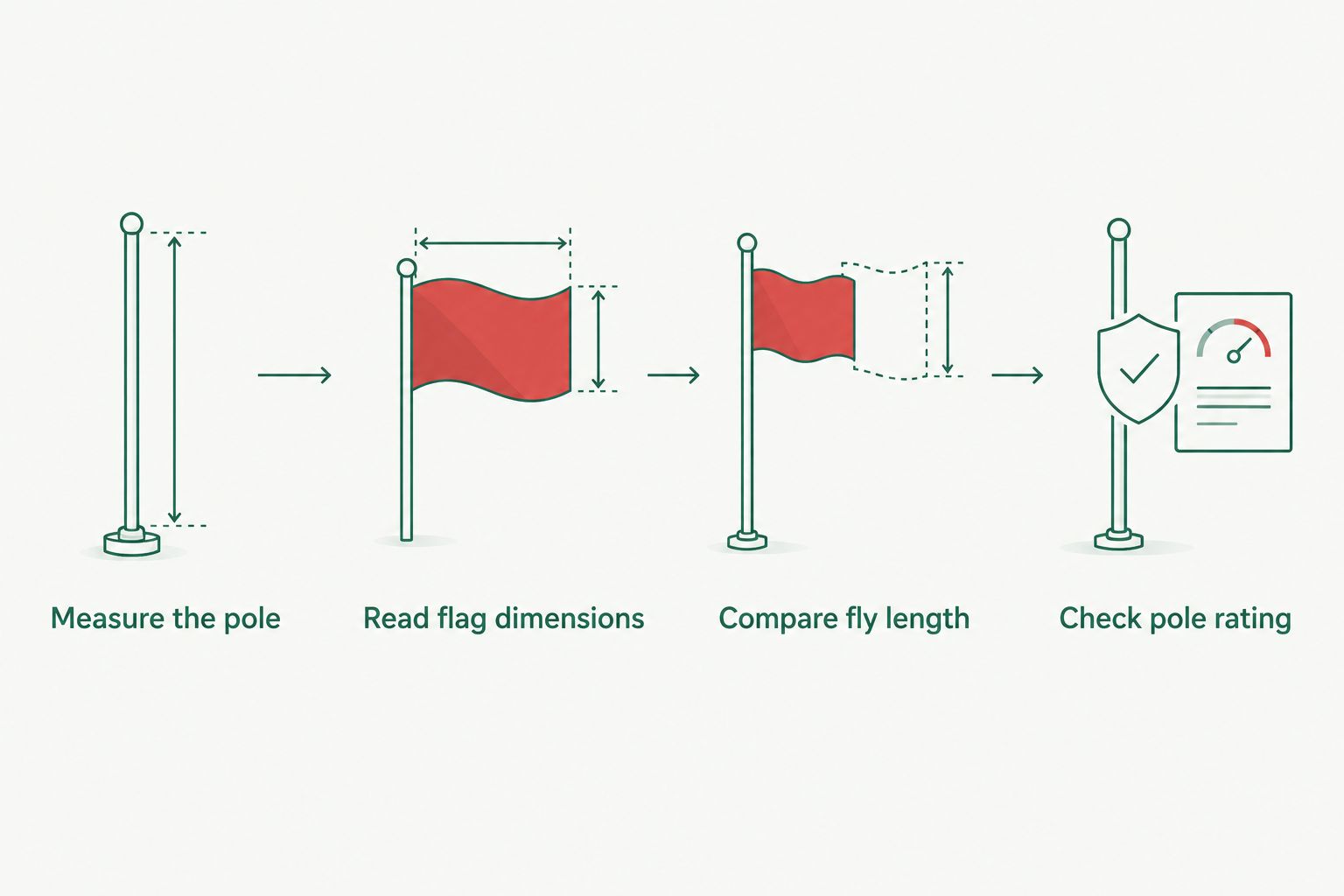
How to measure the pole and read the flag label
Use the installed pole height specified for your setup, not the length of an uninstalled pole section. If the stated height includes a portion below ground, confirm the height used for flag selection in the pole documentation. Record that height in feet, then compare it with the chart’s first column.
Next, read the flag dimensions in order. On a 5 × 8 ft flag, the 5 ft side is the hoist and the 8 ft side is the fly. If your pole is 30 ft tall, the chart’s calculated fly range is 7.5–10 ft, so the 8 ft fly sits within that range. The calculation is straightforward; approval for a particular pole still comes from its specifications.
Do not substitute flag area for fly length. A flag can have dimensions that look similar on a listing while presenting a different fly length. Check both measurements on the product listing, especially when replacing a flag on existing hardware.
What changes the sizing decision?
Pole type and mounting
A residential wall-mounted pole projects from a building; an in-ground commercial pole stands on its own. The 2026 chart is most useful when you know the installed height of a freestanding pole. For a house-mounted setup, follow the kit’s flag-size instructions rather than selecting a flag from the commercial-height rows.
If you are replacing a flag but keeping the pole, check the existing hardware before ordering. Match the flag’s attachment method to the installed setup. A visually suitable flag is not useful if its attachments do not work with the hardware already in place.
Flag material
Federal Flags sells nylon, polyester and cotton American flags. Choose size first, then check material against the intended display and the pole’s specifications. A dimension-only chart cannot compare how different fabrics load a pole in wind, and it cannot predict how long a flag will last outdoors.
The ultra heavy duty American flag is identified in the store catalog as a 2-ply polyester flag. That material detail helps you compare listings, but it does not supply the dimensions of the variant you need. Confirm the available size and your pole’s flag-size guidance before pairing them.
Wind rating
A flagpole’s stated wind rating is a property of a particular pole listing, not blanket approval for every flag size. Federal Flags has commercial pole listings at the same height with different stated wind ratings. Do not use height alone as a substitute for the exact pole model’s specifications.
A larger flag presents more fabric to the wind than a smaller one. That makes the approved flag size a separate check even when the fly falls neatly inside the chart range. For an exposed installation, make that check before you settle on the biggest example in the table.
Compare the main display options
The right starting point depends on where the flag will fly. This table separates a visual size recommendation from the product information you still need to verify in 2026.
| Display option | Best for | Practical advantage | Limitation to check |
|---|---|---|---|
| Wall-mounted house pole | Homeowners mounting a flag to a building | Uses a house-pole setup rather than a freestanding commercial installation | Use the kit’s flag-size instructions; the commercial-height chart is not its sizing specification |
| 20 ft in-ground pole | Properties seeking a freestanding display at this height | A 3 × 5 ft flag provides a 5 ft fly, one-quarter of pole height | Verify the exact pole’s approved flag size and installation requirements |
| 30 ft commercial pole | Businesses seeking a taller freestanding display | A 5 × 8 ft flag provides an 8 ft fly within the calculated range | Confirm that the selected model is approved for the chosen flag |
| 40 ft commercial pole | Sites considering a larger display | A 6 × 10 ft flag provides a 10 ft fly, one-quarter of pole height | Review the model’s flag-size and site requirements rather than scaling up by appearance alone |
Federal Flags is best for homeowners and businesses choosing an American flag alongside a residential or commercial flagpole. The catalog covers both categories; its limitation for this sizing decision is that a catalog category alone cannot confirm a flag-and-pole pairing. Use the specifications of the exact items you intend to install.
Flagpole options to check


A practical selection sequence
For an existing pole, identify the pole model before choosing the flag. Find its installed height and approved flag-size information. If you have only a height measurement, the 2026 chart gives you a shortlist of visual sizes, not permission to use any of them.
For a new installation, decide first whether the flag will be wall-mounted or flown on a freestanding pole. Then choose a pole suited to the site, review its stated specifications, and select a flag dimension that meets those specifications. Reversing that order can leave you with a flag that looks proportional on paper but is not an approved match for the pole.
Use this short checklist when comparing listings:
- Pole height: Is it the installed height relevant to your display?
- Flag dimensions: Which measurement is the fly?
- Approved flag size: Does the exact pole listing support the flag you chose?
- Mounting and hardware: Will the flag attach to the setup you have?
- Material: Does the flag listing identify the fabric you intend to use?
Keep the chart open while you shop, but give the model-specific guidance the final say. The one-quarter to one-third rule is useful because it narrows a visual choice quickly. It cannot replace an installation document or a product specification.
FAQ
What size flag for a 20 ft flagpole?
A 3 × 5 ft flag is a practical visual starting point for a 20 ft flagpole. Its 5 ft fly equals one-quarter of the pole height; confirm the pole’s approved flag size before use.
What size flag for a 25 ft flagpole?
A 5 × 8 ft flag is within this chart’s calculated range for a 25 ft pole. Its 8 ft fly is 32% of pole height; check the exact pole’s flag-size specifications.
What size flag for a 30 ft flagpole?
A 5 × 8 ft flag is a starting point for a 30 ft flagpole. Its 8 ft fly falls within the chart’s 7.5–10 ft visual range, but pole approval is a separate check.
What size flag for a 40 ft flagpole?
A 6 × 10 ft flag is a starting point for a 40 ft pole. The 10 ft fly is one-quarter of pole height; confirm the flag size permitted for the specific pole.
Should I use flag height or flag length to size a flagpole?
Use the flag’s fly, or horizontal length, when applying this chart. For a 3 × 5 ft flag, compare 5 ft with the pole height, then check the pole’s approved flag size.
Does a flagpole wind rating tell me which flag size to buy?
No. A pole’s stated wind rating does not by itself approve every flag dimension. Check the flag-size guidance for the exact model and intended installation.
Does the flagpole height chart apply to a wall-mounted house pole?
Use the wall-mounted kit’s flag-size instructions instead of treating the freestanding-pole chart as its specification. The chart provides a visual ratio, not approval for a house-mounted assembly.
One last thing
A correctly calculated ratio can still produce the wrong purchase. For 2026 flag selection, the pole’s approved flag size outranks the chart’s example size. If you already own the pole, identify its model first; if you are buying both items, check their specifications together before selecting the flag dimensions.

