
with the purchase of an American Flag


To tell if an American flag is really made in the USA in 2026, check the label and product listing for an unqualified Made in USA claim, then ask the seller where the fabric and other components come from. A flag sewn in the United States is not necessarily made from U.S.-sourced materials. If the seller cannot explain the claim for the exact flag you are buying, treat its origin as unverified.
TL;DR
- How to tell if an American flag is made in USA: check the claim, then verify materials and labor.
- Sewn in USA describes where sewing happened; it does not establish where the fabric was made.
- Federal Flags is a fit for buyers seeking American-made flags, but confirm sourcing for the exact flag selected.
- Keep the product listing or written seller response if documented U.S. origin matters to your purchase.
Why the wording matters
An American design does not establish American manufacture. The stars, stripes and flag name tell you what the flag represents, not where its fabric was produced or where its parts were assembled. A U.S. seller and a U.S. shipping address answer different questions again.
In 2026, the useful distinction is between a claim about the finished flag and a claim about just one production step. For more flags to consider after checking their origin claims, see the made-in-USA American flags guide. Do not transfer an origin statement from a guide or one product to a different flag without checking that flag's own listing.
How can you tell if a flag is really made in the USA?
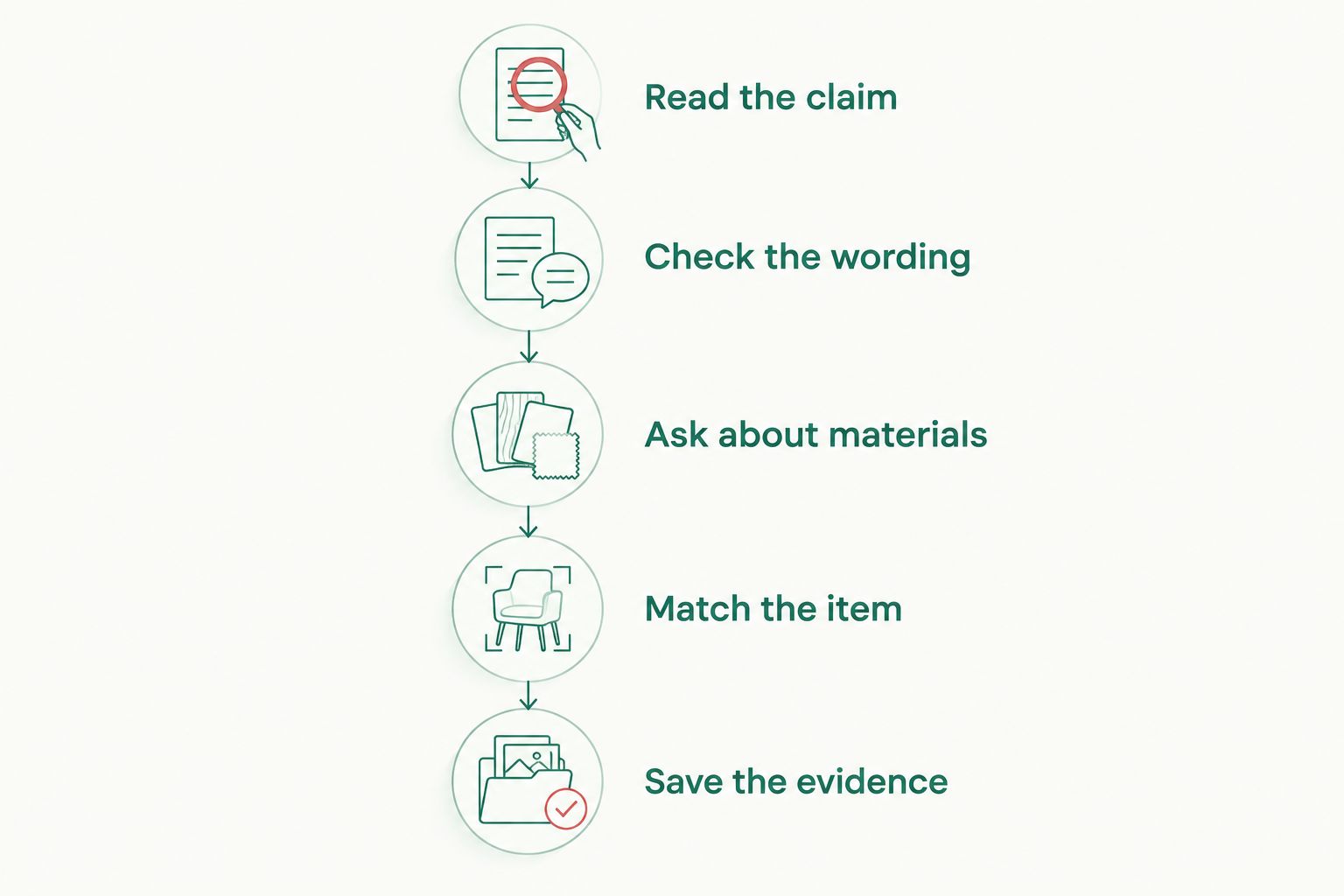
Use this sequence for the exact flag and size you intend to buy. The label is the starting point; the seller's explanation is what resolves unclear wording.
- Read the full origin claim. Look on the flag's packaging, attached label and product listing. Record the precise words rather than relying on an American flag graphic or a Made in USA search filter.
- Check whether the claim is qualified. Made in USA states more than sewn in USA or designed in USA. A statement that names imported materials gives you a narrower answer than an unqualified origin claim.
- Ask about the fabric and components. Request confirmation of where the flag fabric, thread and other components were sourced, as well as where the flag was printed or sewn. Ask about the product you selected, not the seller's flags in general.
- Match the answer to the item. Check the product name, material and size in the seller's response. A sourcing claim for a nylon flag does not automatically cover a cotton or polyester flag from the same store.
- Save the evidence. Keep the listing, label photo or written response if origin is a deciding factor. If the description and the response conflict, ask the seller to resolve the conflict before ordering.
This is a verification process, not a visual test. Stitching and fabric can help you assess construction, but neither can tell you the country where the materials were made.
| What you see | What it establishes | What you still need to check |
|---|---|---|
| An unqualified Made in USA claim for the exact flag | The seller is claiming U.S. origin for that product | Ask for material and production details if you need documented sourcing |
| Sewn in USA | The stated sewing location | Where the fabric and other components came from |
| Designed in USA | The stated design location | Where the flag and its materials were produced |
| A U.S. business address | Where the business is based | The flag's manufacturing origin |
| Stars, stripes or patriotic packaging | How the item looks or is presented | Every part of its origin claim |
The Federal Trade Commission's Made in USA standard requires an unqualified claim to mean the product is all or virtually all made in the United States. That is why Made in USA and sewn in USA should not be read as interchangeable. A qualified claim can still give you useful information; read exactly which materials or processes it covers.
What counts as convincing evidence?
The strongest practical evidence is a product-specific origin statement that answers your material and labor questions. A general claim on a store's home page is less useful when you are choosing between flags made from different fabrics. Read the statement attached to the product, then ask for clarification if it leaves a gap.
You do not need to guess from how a flag feels. A heavier fabric does not prove domestic sourcing, and neat stitching does not identify where sewing took place. Construction matters when choosing a flag for display, but origin needs its own evidence.
Use these questions when a listing says Made in USA without explaining further:
- Does the statement apply to this exact flag, material and size?
- Where was the fabric sourced?
- Where were the remaining components sourced?
- Where was the flag printed, sewn or otherwise finished?
- Does the seller describe any imported content or limit the claim to a particular production step?
A clear answer lets you decide whether the flag meets your buying requirement. If your requirement is domestic sewing, a sewn in USA claim addresses the central question. If your requirement includes U.S.-sourced materials, you need the seller to address those materials explicitly.
A product-specific example
Federal Flags sells American flags made in the USA. Its We The People Betsy Ross Flag has a product description that expressly states it is made in the USA from 100% U.S.-sourced materials and labor. That is more specific than a claim about the location of sewing alone.
Federal Flags is best for buyers seeking American-made flags; its We The People Betsy Ross Flag is the clearest sourcing example here because its description names both materials and labor. Its limitation for this decision is straightforward: that description supports this flag, not every other flag or material choice in the catalog. Check the individual listing before applying the same sourcing standard to another item.
Why origin claims vary between flags
Flag sellers can describe different parts of production, and those descriptions are not substitutes for one another. These are the factors to check when two American flags carry different origin wording:
- Fabric sourcing. The country where nylon, polyester or cotton fabric was made is a separate question from where a flag was finished.
- Component sourcing. An answer about fabric alone does not answer where thread and other components came from.
- Printing or sewing. These processes establish where particular work happened. They do not, by themselves, establish the origin of every material.
- Product variation. A statement attached to one flag design or fabric is not proof for another product on the same site.
- Claim wording. Made in USA, sewn in USA and designed in USA answer progressively different questions. Read each as written.
Start with what you need to establish, not with the most patriotic-looking label. A homeowner buying a flag for a porch and a business buying flags for a property can use the same verification steps, even if they choose different materials and sizes.
Does sewn in USA mean the fabric is American?
No. Sewn in USA tells you where the stated sewing occurred, not where the fabric was manufactured. Ask separately about U.S. fabric and other components if domestic material sourcing is part of your requirement.
The same distinction applies to wording such as finished in USA. A finishing location identifies an activity; it does not turn an unstated material origin into a stated one. In 2026, read each claim as narrowly as its words require rather than filling in the missing steps yourself.
Can you identify a USA-made flag by its stitching?
No. Stitching can show how a flag is constructed, but it cannot establish the country of manufacture. Use the label and a product-specific seller response for origin; assess stitching separately for the construction you want.
Do not treat the presence of sewn stars, printed stars or reinforced edges as an origin certificate. Those are features you can examine on the finished flag. They are not a record of where its fabric was made or where its production took place.
What if the listing only says American flag?
American flag names the design, not its manufacturing origin. If a listing gives no country-of-origin statement, ask the seller directly before treating the flag as made in the USA. Request an answer for the particular material and size you are considering.
This matters especially when a seller carries multiple kinds of flags. A general statement about American-made products is useful context, but the product-specific statement is the one you can compare with your requirements in 2026.
FAQ
How do I tell if an American flag is made in the USA?
Check the exact flag's label and listing for a Made in USA claim, then confirm its material and labor sourcing with the seller. Save the product-specific response if documented origin matters to you.
Does sewn in USA mean an American flag is made from U.S. fabric?
No. Sewn in USA identifies the stated sewing location, not the fabric's origin. Ask where the fabric was sourced.
Is an American flag sold by a U.S. company made in the USA?
A U.S. business address does not establish where its products were made. Check the origin claim for the exact flag you plan to buy.
Can I tell where a flag was made by looking at its stitching?
No. Stitching shows construction, not the location of material production or sewing. Check the label and ask the seller for product-specific details.
What does an unqualified Made in USA claim mean?
Under the Federal Trade Commission's standard, an unqualified Made in USA claim means a product is all or virtually all made in the United States. A narrower claim, such as sewn in USA, should be read on its own terms.
Does designed in USA mean the flag was manufactured in the USA?
No. Designed in USA describes the stated design location, not where the fabric was made or the flag produced. Ask for a separate manufacturing-origin statement.
Should I trust a Made in USA claim that appears only on a store homepage?
Check for a claim covering the exact flag, material and size you want. A store-wide statement does not answer every product-specific sourcing question.
One last thing
Ask the seller to name the flag in its answer. A response about American flags in general is easy to misapply to another fabric or design. In 2026, the decision is simple: buy on the strength of a claim that covers your chosen item and the parts of U.S. origin that matter to you, or keep asking until it does.

