

with the purchase of an American Flag


Choosing the correct wind rating is one of the most important decisions when purchasing a commercial flagpole. Wind exposure directly impacts the lifespan, safety, and performance of your flagpole, especially in open or storm-prone areas.
This guide explains how wind ratings work and how to select the right option for your location.
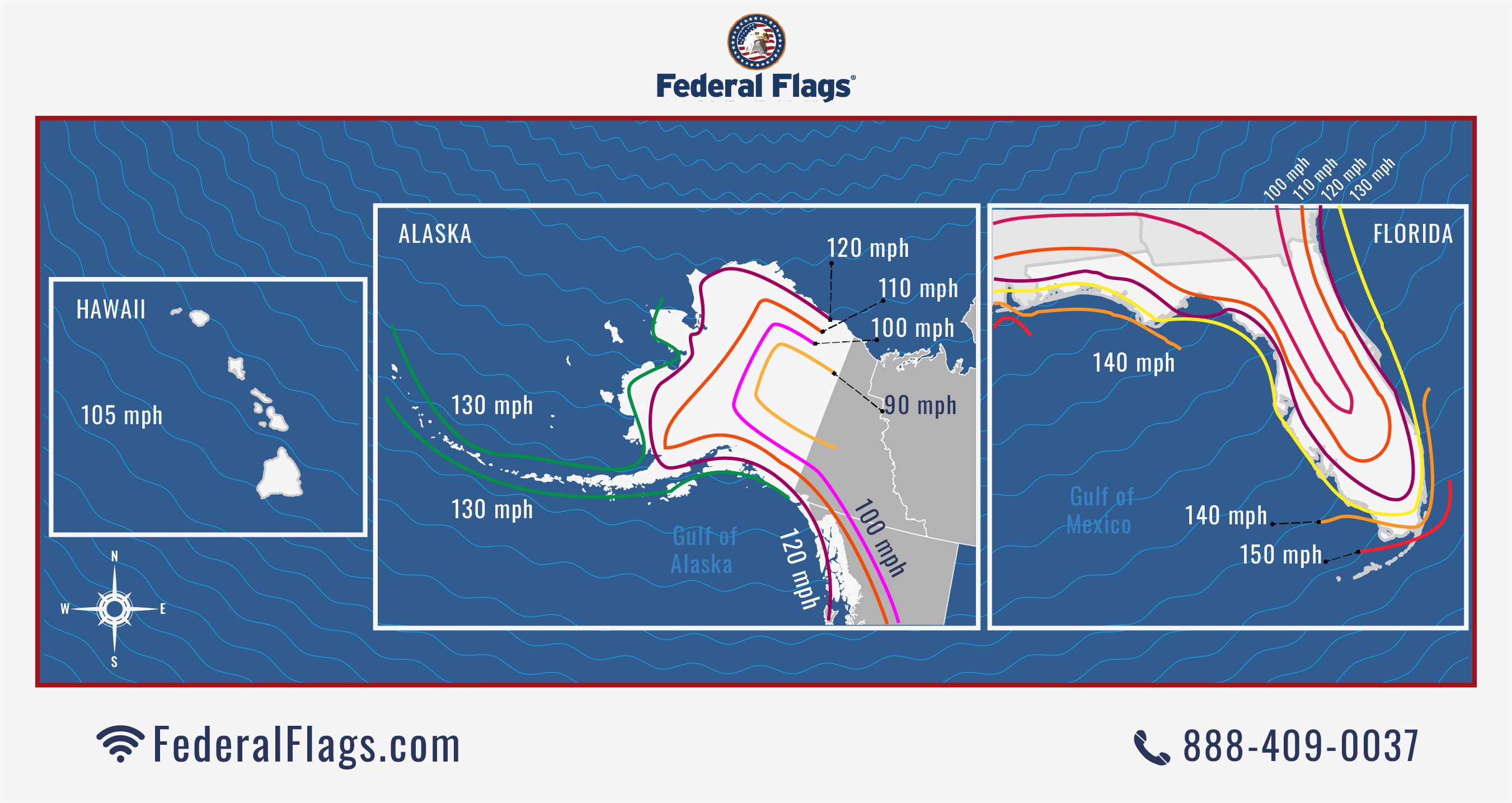
What Is a Wind Rating?
A wind rating refers to the maximum wind speed a flagpole can safely withstand. Ratings are typically measured in miles per hour (mph) and account for both flagged and unflagged conditions.
When a flag is attached, wind resistance increases significantly, placing additional stress on the pole. This is why selecting the correct rating is essential for long-term durability.
Standard Wind Ratings for Commercial Flagpoles
- 70 to 90 mph - Suitable for most standard commercial installations
- 90 to 120 mph - Recommended for areas with frequent strong winds
- 120+ mph - Required for coastal or hurricane-prone regions
If your property is located in an open area with little wind protection, you should consider a higher-rated flagpole.
Shop commercial flagpoles for sale built for durability and performance.
How to Choose the Right Wind Rating
When selecting a wind rating, consider the following:
1. Geographic Location
Areas near the coast or regions prone to storms require higher wind ratings.
2. Building Exposure
Properties in open spaces or elevated areas experience stronger wind forces.
3. Flag Size
Larger flags create more wind resistance, increasing stress on the pole.
Wind Speed Recommendations by Region
Different parts of the United States experience varying wind conditions. Choosing the right wind rating based on your region is critical.
- Coastal regions (Florida, Gulf Coast, East Coast): 120+ mph recommended
- Midwest and open plains: 90 to 120 mph recommended
- Urban and sheltered areas: 70 to 90 mph typically sufficient
If your property is exposed to frequent storms or high winds, it is always safer to choose a higher-rated flagpole.
For extreme conditions, explore high-wind commercial flagpoles designed for coastal and storm-prone areas.
How Flag Size Affects Wind Load
One of the most overlooked factors in flagpole selection is flag size.
Larger flags create significantly more wind resistance, which increases the load placed on the flagpole.
Key Considerations
- Larger flags require stronger poles
- Higher wind speeds amplify stress
- Incorrect sizing can lead to premature wear or failure
As a general rule, always match your flag size to your flagpole height and wind rating to ensure safe operation.
Not sure what size you need? Read our commercial flagpole buying guide.
High-Wind Flagpole Recommendations
For maximum durability, businesses in high-wind regions should choose high-wind rated commercial flagpoles designed with reinforced construction and thicker aluminum walls.
These flagpoles are specifically engineered to withstand extreme weather conditions while maintaining long-term performance.
Shop hurricane-rated commercial flagpoles for maximum strength and reliability.
Why Wind Ratings Matter
Choosing the correct wind rating helps:
- Prevent structural damage
- Extend the lifespan of your flagpole
- Reduce maintenance costs
- Improve safety
Selecting the right flagpole upfront saves money and prevents costly replacements in the future.
Frequently Asked Questions
What wind rating do I need for a commercial flagpole?
The correct wind rating depends on your location and exposure. Most commercial installations require between 70 and 120 mph, while coastal or hurricane-prone areas may require 120+ mph.
What happens if my flagpole wind rating is too low?
If the wind rating is too low, the flagpole may experience excessive stress, leading to damage, bending, or failure over time.
Do larger flags require higher wind ratings?
Yes, larger flags create more wind resistance, increasing the load on the flagpole. This often requires a higher wind rating for safe operation.
Final Recommendation
If you are unsure which wind rating to choose, it is always better to select a slightly higher rating than required. This provides additional protection and ensures long-term performance.
Browse all commercial flagpoles for sale to find the best option for your location.

