

with the purchase of an American Flag


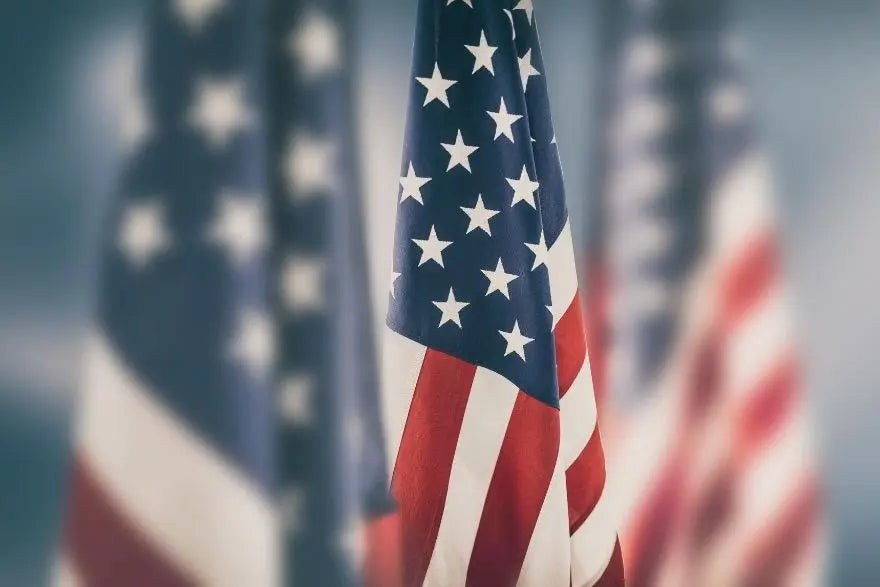
The American flag has familiar stars and stripes, but its individual parts have names that are useful to know when choosing, displaying, or caring for a flag. This guide identifies each major part of the U.S. flag: the union, stars, stripes, hoist, fly end, and grommets.
Name every part of the American flag
| Flag part | Where it is | What it does |
|---|---|---|
| Union or canton | Blue field in the upper hoist-side corner | Holds the 50 stars |
| Hoist | Vertical edge nearest the pole | Attaches the flag to the pole or halyard |
| Fly | Portion extending away from the pole | Moves freely in the wind |
| Fly end | Outer edge opposite the hoist | Receives the most wind exposure |
| Grommets | Reinforced metal eyelets along the hoist | Accept clips, hooks, or rope |
- Union (or canton): the blue field in the upper left corner when the flag is displayed properly.
- Stars: 50 white stars in the union, one for each state.
- Stripes: 13 alternating red and white stripes for the original colonies.
- Hoist: the vertical edge of the flag that attaches to the pole or halyard.
- Fly: the portion of the flag that extends outward from the hoist.
- Fly end: the outer vertical edge of the flag, opposite the hoist.
- Grommets: the metal-reinforced holes at the hoist for clips, hooks, or rope.
The union, also called the canton
The union is the blue field in the upper left portion of the American flag. It is also called the canton. On a properly displayed U.S. flag, the union is always at the top and toward the observer’s left when the flag is hanging flat against a wall. The 50 stars appear in this field, representing the 50 states united as one nation.
The 50 stars
Each white, five-pointed star represents one state. The current 50-star design has been in use since July 4, 1960, after Hawaii became the 50th state. Stars are arranged in nine offset rows so they remain clear and balanced across the union.
The 13 stripes
The flag has 13 horizontal stripes: seven red and six white. They represent the 13 original colonies. On a standard American flag, the top and bottom stripes are red. The stripes run from the hoist side to the fly end.
The hoist, fly, fly end, and grommets
The hoist is the edge of the flag closest to the pole. On most outdoor flags, this edge has a reinforced header with brass grommets. The grommets are the round, reinforced openings used to fasten the flag to clips or a halyard.
The fly is the part of the flag that moves freely away from the pole. Its outer edge is the fly end. Because the fly end receives the most wind exposure, it is usually the first area to show wear. Inspect it regularly and bring the flag in during severe weather when possible.
What the colors of the American flag stand for
The commonly cited meanings of the colors come from the Great Seal: red stands for hardiness and valor, white stands for purity and innocence, and blue stands for vigilance, perseverance, and justice. These meanings help explain why the Stars and Stripes remains an enduring national symbol.
Choosing a flag built for regular display
Knowing the parts of a flag makes it easier to choose the right attachment hardware and notice normal wear. For regular outdoor use, start with a properly sized American flag and match its grommets or header to the hardware on the pole. Federal Flags offers American flags and flagpoles made for dependable display.
1 comment


Federal and Police flags are displayed on the front wall (wide) of my house. When facing the house from the street which one should be on the right?